Product Highlights
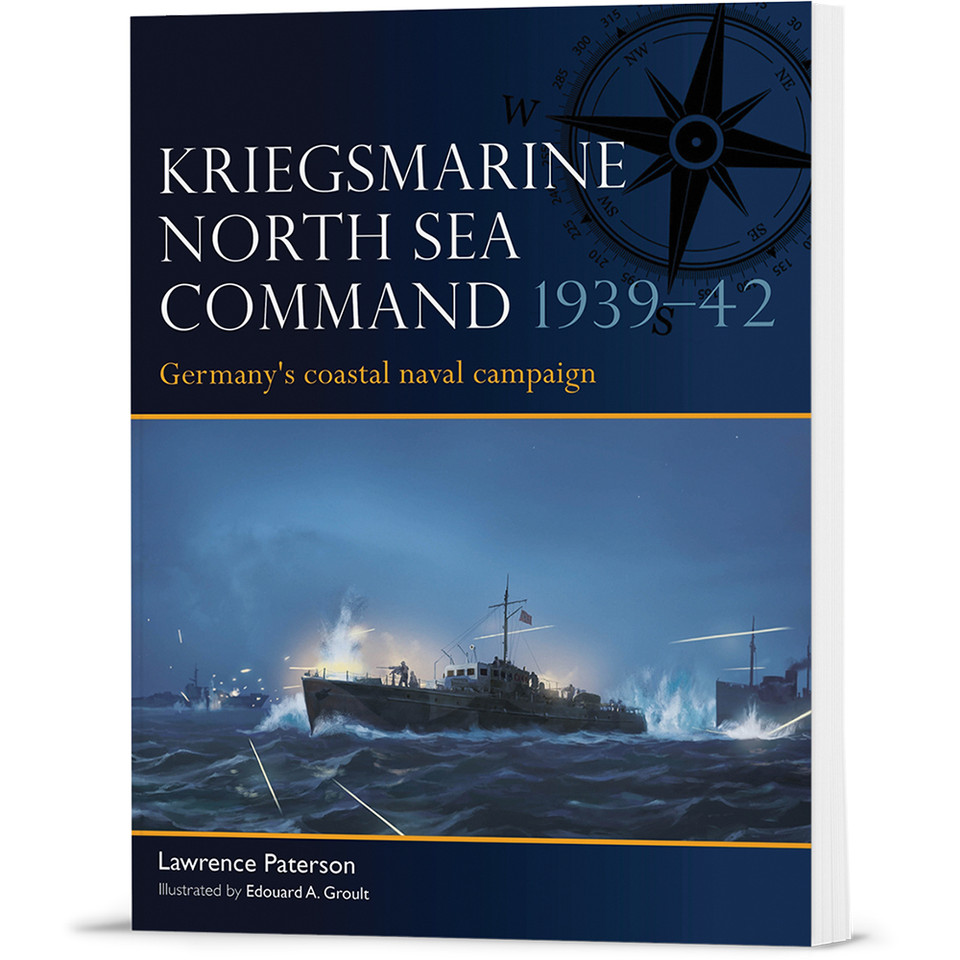
Kriegsmarine North Sea Command 1939-42: Germany's Coastal Naval Campaign - (9781472867438)
Britain's war economy relied not only on the Atlantic Convoys, but also on superiority in coastal waters. Six days out of seven, convoys left Scotland and northern England, laden chiefly with the coal that the south required - London alone needing 40,000 tons a week. Cutting these lines, as well as challenging military and naval movements, was the responsibility of Germany's North Sea Command.
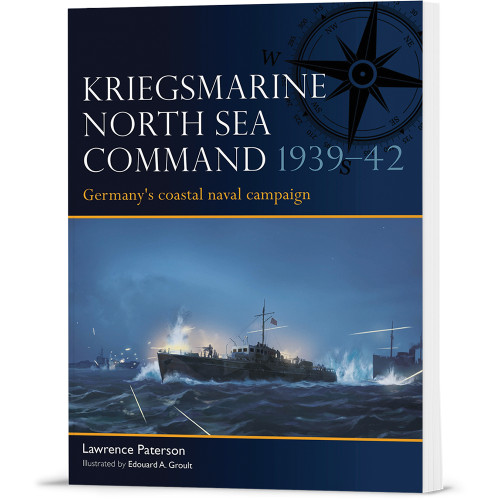
Here, Kriegsmarine expert Lawrence Paterson offers the first study of Germany's fierce war in the North Sea from a strategic and operational perspective. Although famous for its dashing S-boats, the North Sea saw an array of ships from battleships (briefly) and cruisers to converted fishing boats. Destroyers, torpedo boats and minelayers laid extensive mine barrages close inshore, in the face of the Royal Navy. He also explores the command's defences, with its many Kriegsmarine shore troops, artillery emplacements, flak batteries and small units of marines.
German coastal forces engaged British forces at Dunkirk and, with the fall of France, the war spread along the entire coastline. With diagrams, archive photos (some unpublished) and original artwork, this is the story of the Kriegsmarine's struggle to cut Britain's military and trade arteries.
Features
- 80 pages
- Illustrated throughout
- Softcover
- Book dimensions are 10" x 7"
Britain's war economy relied not only on the Atlantic Convoys, but also on superiority in coastal waters. Six days out of seven, convoys left Scotland and northern England, laden chiefly with the coal that the south required - London alone needing 40,000 tons a week. Cutting these lines, as well as challenging military and naval movements, was the responsibility of Germany's North Sea Command.
Here, Kriegsmarine expert Lawrence Paterson offers the first study of Germany's fierce war in the North Sea from a strategic and operational perspective. Although famous for its dashing S-boats, the North Sea saw an array of ships from battleships (briefly) and cruisers to converted fishing boats. Destroyers, torpedo boats and minelayers laid extensive mine barrages close inshore, in the face of the Royal Navy. He also explores the command's defences, with its many Kriegsmarine shore troops, artillery emplacements, flak batteries and small units of marines.
German coastal forces engaged British forces at Dunkirk and, with the fall of France, the war spread along the entire coastline. With diagrams, archive photos (some unpublished) and original artwork, this is the story of the Kriegsmarine's struggle to cut Britain's military and trade arteries.